Etikett: Pakistan

  • Betalda suni miliser i Irak

    Jag vet inte om jag hade beskrivit beväpningen av en lokal sunni milis som en stor framgång för den amerikanska ockupationen. AQ fanns heller inte i Irak före den amerikanska invasionen och har aldrig bestått av mer än några 1000. Vilket kan få en del att undra över vilka de övriga 100-200000 aktiv motstånds folket som den amerikanska militären beskrev var.

    Självklart har diverse klaner
    i Pakistan köpts över till regerings/usa sidan. Därför pågår det just nu hårda strider i de autonoma klanområdena. Amerikansk medier har i mer än ett halvår skrivit om pentagons planer på att föra över den irakiska modellen till Pakistan och Afghanistan. Där nu amerikanska specialstyrkor tillsammans med pakistanska militären slås i klanområdena.

    Det är förövrigt Saudi-Arabien
    som står för mycket av pengarna till klanerna i Irak. Mer intressant är vad som händer den dag USA drar sig ur Irak. Samma som Afghanistan och Somalia?

    gudmundson: Uppvaknande?

    En stor del i vad som framstår som framgång för George W Bushs truppförstärkning i Irak ligger i att general Petraeus hittat en metod för att vända irakiska väpnade grupper mot al Qaida. Lokala Awakening councils sköter en stor del av renhållningen, medan den kraftigt uppbyggda irakiska armén befäster ordningen och amerikanerna sköter större operationer.

    Powered by ScribeFire.

  • Gaza’s lidande

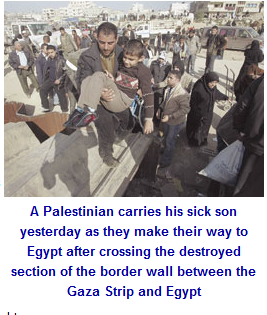
    Svensk media vägrar ju att uppmärksamma lidandet och den kollektiva bestraffning av civilbefolkningen i Gaza. Men notera vilka det var som slog sig in till Egypten. Svältande och sjuka människor desperata på jakt efter mediciner. Varför tillåts Israel föra krig mot 20 månader gamla bebisar medan världen tittar på?

    Och varför har Israelerna glömt sin historia?

    Läs berättelsen på engelska om revolten i Sobibor och fundera på betydelsen av att stänga in en hel befolkning bakom murar och taggtråd med. Jag gör inga jämförelser med nazister och Israeler, bara med människosynen. Eller har arabiska liv mindre värde än judiska? Gaza är inget dödsläger men ett konsentrationsläger med över en miljon innevånare. Och innan någon pratar om Hamas attacker mot Israel läs om det Hudna förslag som Hamas 2006 gav Israel. Vilket både Israel och världen i övrigt ignorerade.

    Pause for Peace – New York Times

    We Palestinians are prepared to enter into a hudna to bring about an
    immediate end to the occupation and to initiate a period of peaceful
    coexistence during which both sides would refrain from any form of
    military aggression or provocation. During this period of calm and
    negotiation we can address the important issues like the right of
    return and the release of prisoners. If the negotiations fail to
    achieve a durable settlement, the next generation of Palestinians and
    Israelis will have to decide whether or not to renew the hudna and the
    search for a negotiated peace.


    http://www.sobibor.info/

    Shortly after Yom Kippur in 1943,
    a group of Jewish prisoners in the Sobibor extermination camp,
    determined to live rather than die, began devising a plan for
    a revolt. A couple of days later, during the afternoon of 14
    October 1943, one of the most daring displays of Jewish
    resistance during the Holocaust began—the escape from Sobibor.
    Gulf Times – Qatar’s top-selling English daily newspaper – Gulf/Arab World

    RAFAH, Egypt: Abu Abdullah
    wanted only one thing when he crossed through the shattered wall into
    Egypt – a vaccine for his baby boy that can’t be found in the
    neighbouring Gaza Strip.

    “He’s 20 months old and
    should have had his German measles jab five months ago, but you can’t
    find it anywhere in Gaza because of the Israeli blockade,” he says,
    cradling his child while the pharmacist searches for the precious
    liquid.
    Abu Abdullah is among an estimated 700,000 Palestinians who
    have crossed the border from the isolated enclave since the towering
    concrete wall separating the Gaza Strip from Egypt was blown up Tuesday
    night.
    Most come for petrol, cigarettes, cooking oil and other
    staples, but Abu Abdullah says that once he has the vaccine, he’ll be
    going back without any of the products he could sell on the lucrative
    black market at home.
    “Once I have the jab, I don’t need anything else from here, just my son’s health.”

    White-bearded
    pharmacist Hajj Khalil sits outside his store, dumbfounded by the rush
    on his stocks which have left its shelves virtually empty, like those
    of many others in the divided border town of Rafah.
    “They want everything because there’s nothing in Gaza,” he says.
    “The
    only things I have left are beauty products. Antibiotics sold out the
    quickest. Now I’ve sold everything and I’m waiting for more stocks to
    come from Cairo.”
    Hundreds of parents of young children, others
    pushing elderly relatives in wheelchairs, push through the thronging
    crowds of Palestinian shoppers on Rafah’s main Salaheddin Street to get
    medicine.
    “I did $5,000 worth of business yesterday, more than I
    make in a month normally, says a pharmacist who gives only his first
    name Mohamed.
    “I give a discount to people who are obviously poor.
    The most popular drugs are for cancer therapy, hypertension, sclerosis
    of the liver.
    “Some Palestinian ambulances came through yesterday bringing victims of the intifada to be treated here.”
    Dr Yussef Musallam has come from Gaza City with $1,000 to spend on drugs to take back to his pharmacy.
    “I’m
    going to buy all the drugs I can, we have nothing in Gaza because of
    the siege. In spite of the tunnels, the siege hit us badly. I’ve got
    $1,000, which is everything I have.
    “It used to take one day to ask
    for drugs from the Israelis but since the siege, it takes one month, if
    they allow it at all, they refuse a lot of orders.”
    Even before the
    complete lockdown imposed by Israel last Thursday, the World Health
    Organisation was expressing alarm at Gaza’s deepening isolation and
    accused Israel of putting lives in danger by not allowing dozens of
    patients to leave for treatment.
    The UN agency said last month that
    23% of requests in October for treatment in Israel were refused,
    compared with 17 % in September and 10% in June, when Hamas seized
    control of Gaza from forces loyal to Palestinian President Mahmoud
    Abbas.

    Läs mer i Svd

  • Indien mot Pakistan

    Att Indien nu ökar sitt inflyttande i Afghanistan måste vara med USAs goda vilja. Samtidigt kan man undra vad USA tänker som uppmuntrar Pakistans största rival att utmana landet på deras egen bakgård.

    Utrikesbloggen – Indien ökar sitt inflytande i Afghanistan

    Indien ökar sitt inflytande i Afghanistan

    Indiens ökande investeringar i grannlandet Afghanistan skapar oro hos konkurrenten Pakistan. Intresset i förbindelserna mellan länderna begränsar sig inte enbart till afghanska nötter i Indien och indiska filmer i Afghanistan. Indien är största regionala biståndsgivare med bistånd i Afghanistan på 750 miljoner dollar sedan 2001. Indien utbildar tjänstemän, diplomater och poliser i Afghanistan, skriver Jayshree Bajoria för Council on Foreign Relations.

    Powered by ScribeFire.

  • Den amerikanska kuppen i pakistan

    Värt att läsa för den som läser engelska. Inte kan det vara så att USA skulle stå bakom olika varianter på färgkodade ’folkliga’ revolutioner? För visst organiserar sig dessa självständigt men egen finansiering.  Ironi förstås men det var inte alltför länge sedan som det gamla Sovjetunionens  anklagades för att vilja  organisera  ’folkliga’ revolutioner runt om i världen. Idag är det amerikanska neoliberaler som talar sig varma för samma sak.

    Mer seriöst
    . Sedan president Bush besök i Indien har det varit ganska klart att USA håller på att byta allierad i området. Indien ska då bli den regionala motvikten mot Kinas ökande inflytande i regionen från Burma, Pakistan och förstås Iran. Det är Kina som bygger pipelines både till Burma och Pakistan. Och som arbetar på att utvidga sin flottnärvaro i området.

    Om historien är sann
    om den amerikanskt rekryterad pakistanska talibanen som skickades tillbaka från Guantanamo till Pakistan där han sedan angrepp och kidnappad 2 kinesiska ingenjörer som arbetade på pipeline bygget till Iran är omöjligt att veta. Men det anger ju vad det handlar om. Kontrollen över mellanöstern och dess olja.

    Gå, läs och gör en egen bedömning.

    Asia Times Online :: South Asia news – The plan to topple Pakistan’s military

    As he completed the remaining part of his US visit, his allies in Washington and elsewhere, as all evidence suggests now, were plotting his downfall. They had decided to take a page from the book of successful ”color revolutions” where Western governments covertly used money, private media, student unions, NGOs and international pressure to stage coups, basically overthrowing individuals not fitting well with Washington’s agenda.

    This recipe proved its success in former Yugoslavia, and more recently in Georgia, Ukraine and Kazakhstan.

    In Pakistan, the target is a president who refuses to play ball with the US on Afghanistan, China and Dr Abdul Qadeer Khan.

    To get rid of him, an impressive operation is underway:

  • A carefully crafted media blitzkrieg launched early this year assailing the Pakistani president from all sides, questioning his power, his role in Washington’s ”war on terror” and predicting his downfall.
  • Money pumped into the country to pay for organized dissent.
  • Willing activists assigned to mobilize and organize accessible social groups.
  • A campaign waged on the Internet where tens of mailing lists and ”news agencies” have sprung up from nowhere, all demonizing Musharraf and the Pakistani military.
  • European- and American-funded Pakistani NGOs taking a temporary leave from their real work to serve as a makeshift anti-government mobilization machine.
  • US government agencies directly funding some private Pakistani television networks; the channels go into an open anti-government mode, cashing in on some manufactured and other real public grievances regarding inflation and corruption.

    Some of Musharraf’s shady and corrupt political allies feed this campaign, hoping to stay in power under a weakened president.

    All this groundwork completed and chips were in place when the judicial crisis broke out in March. Even Pakistani politicians were surprised at a well-greased and well-organized lawyers’ campaign, complete with flyers, rented cars and buses, excellent event-management and media outreach.

    Currently, students are being recruited and organized into a street movement. The work is ongoing and urban Pakistani students are being cultivated, especially using popular Internet Web sites and ”online hangouts”. The people behind this effort are mostly unknown and faceless, limiting themselves to organizing sporadic, small student gatherings in Lahore and Islamabad, complete with banners, placards and little babies with arm bands for maximum media effect. No major student association has announced yet that it is behind these student protests, which is a very interesting fact glossed over by most journalists covering the story.

    Only a few students from affluent schools have responded so far, and it’s not because the Pakistani government’s countermeasures are effective. They’re not. The reason is that social activism attracts people from affluent backgrounds, closely reflecting a uniquely Pakistani phenomenon where local non-governmental organizations are mostly founded and run by rich, Westernized Pakistanis.

    All of this may appear to be spur-of-the-moment and Musharraf-specific. But it all really began almost three years ago, when, out of the blue and recycling old political arguments, Akbar Bugti launched an armed rebellion against the Pakistani state, surprising security analysts by using rockets and other military equipment that shouldn’t normally be available to a smalltime village thug. Since then, Islamabad has sat on a pile of evidence that links Bugti’s campaign to money and ammunition and logistical support from Afghanistan, directly aided by the Karzai administration and India, with the US turning a blind eye.

  • Gwadar is the pinnacle of Sino-Pakistani strategic cooperation. It’s a modern city that is supposed to link Pakistan, Central Asia, western China with markets in Mideast and Africa. It’s supposed to have roads stretching all the way to China. It’s no coincidence that that country has also earmarked millions of dollars to renovate the Karakoram Highway linking northern Pakistan to western China.

    Some reports in the US media, however, have accused Pakistan and China of building a naval base in the guise of a commercial seaport directly overlooking international oil-shipping lanes. The Indians and some other regional actors are also not comfortable with this project because they see it as commercial competition.

    Powered by ScribeFire.